
Today: 9:00AM - 8:00PM
Search Sell/Trade Financing
Blog / Kia Dealer

Living With an EV Without Home Charging in Egg Harbor Township, NJ — Kia Solutions

Living With an EV Without Home Charging in Egg Harbor Township, NJ — Kia Solutions

Matt Blatt Kia - Living With an EV Without Home Charging in Egg Harbor Township, NJ — Kia Solutions

Picture life in Egg Harbor Township without a driveway or garage charger, yet still enjoying the smooth, quiet drive and low day-to-day costs of an electrified vehicle. Between apartment communities off Tilton Road, condo parking near the Shore, and daily runs along Black Horse Pike, plenty of local drivers want an EV or plug-in hybrid but rely on public charging. This guide explains how Kia electric and electrified models fit that exact use case—no home charger required.

From weekly top-ups during grocery runs to quick DC fast-charge sessions before heading down the Atlantic City Expressway, the right plan makes EV life surprisingly simple. Kia’s lineup covers the spectrum—fully electric SUVs sized for families, compact EVs ideal for city-style parking, and plug-in hybrids that run electric for local trips with a gas backup for longer days.

Below, you will find practical, local-first advice for choosing the Kia that matches your parking, charging access, and driving routes around Egg Harbor Township and the surrounding Shore communities.

Why Kia Works When You Rely on Public Charging

Kia builds EVs and plug-in hybrids that match real-world life. Fast-charging capability on select electric models helps you recover range quickly during a shopping stop, coffee break, or gym session. Many Kia electrified vehicles also pack smart driver assists that cut fatigue on traffic-heavy stretches like Route 40/322, the Garden State Parkway, and Tilton Road. Cabin space, cargo flexibility, and user-friendly tech are designed to simplify family errands, weekend Shore plans, and everything in between.

Even if you cannot plug in at home, the combination of DC fast charging, Level 2 options at public destinations, and efficient onboard energy management keeps daily use predictable. For many Egg Harbor Township drivers, that means charging once or twice a week—often while doing something you would be doing anyway.

Match Your Charging Reality to the Right Kia

Think about your routine. Do you typically park where Level 2 chargers are available for a couple of hours? Do you frequently pass by DC fast chargers on your way to work or to the Shore? Use those answers to align with a Kia that fits your life without a home plug.

  • EV9 three-row SUV: Great for families who want space and rapid DC fast-charge capability, with room for strollers, sports bags, and beach gear.
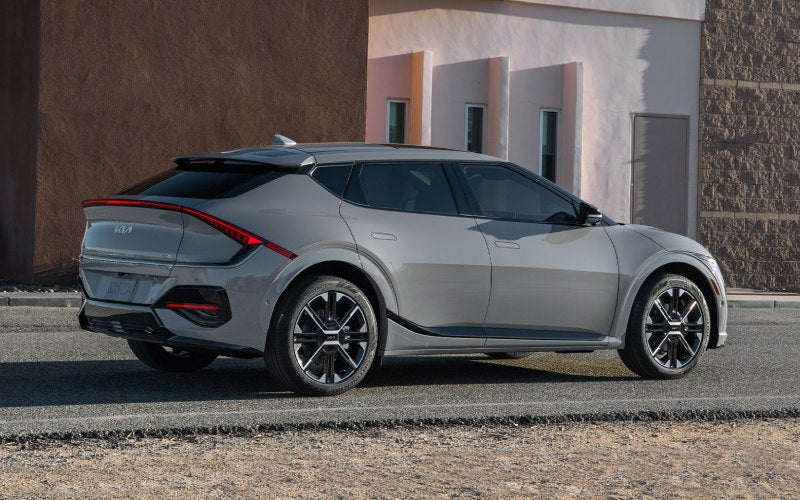
  • EV6 sporty crossover: Ideal for commuters who can add significant range during a short coffee stop, with nimble handling for quick turns at New Jersey jughandles.
  • Niro EV compact SUV: Easy to park at apartment communities and shopping centers, with practical cargo space for weekly errands.
  • Sportage Plug-in Hybrid: Electric driving for local trips most days, plus all-wheel drive availability and gas power for longer weekends.
  • Niro Plug-in Hybrid: A right-sized, apartment-friendly option that handles many local miles on electricity and uses gas when plans change.
  • Sportage Hybrid or Sorento Hybrid: No plugging required—excellent fuel efficiency for drivers who want electrified benefits without planning charging stops.

If you can reliably access DC fast charging once or twice a week, a fully electric Kia can be a fantastic fit. If workplace or destination Level 2 charging is hit-or-miss, a plug-in hybrid bridges the gap with everyday electric miles and seamless gas backup.

Living With Public Charging Across Atlantic County

Public charging becomes routine when you build it into the way you already live—shopping, dining, school pickup, Shore plans, and weekly errands along Black Horse Pike or Tilton Road. Here is a straightforward framework to make that work without stress.

  1. Map your weekly rhythm: List your regular stops—grocery runs, fitness, school, and weekend activities—and note which locations commonly host Level 2 or DC fast chargers.
  2. Plan a weekly top-up: Target one reliable stop where you can add most of your miles for the week—often a 20 to 40 minute DC fast session or a 1 to 2 hour Level 2 while you shop.
  3. Use destination charging: If your gym, workplace, or municipal facilities offer Level 2, grab a few hours there to reduce your weekend fast-charge time.
  4. Keep a buffer: Aim to finish your weekly top-up with a comfortable cushion for unexpected trips to Atlantic City, Ocean City, or the FAA Tech Center area.
  5. Know garage and lot details: For casino or mall garages, mind height clearances for larger SUVs and watch for charger locations near entrances.

Since charging networks are always expanding, check a reputable charging app for current availability, power levels, and user feedback before you head out, especially ahead of Shore-season weekends.

Shore-Ready Practicality Without a Driveway Charger

Life near the Shore can mean crosswinds on bridges, sand-laden cargo, and tight parking under garage overhangs. Kia EVs and electrified SUVs handle those realities well. Many models offer available all-wheel drive for confidence on wet roads, strong regenerative braking to ease stop-and-go near the boardwalk, and versatile cargo holds that swallow chairs, coolers, umbrellas, and sports gear with room to spare.

If your routine includes frequent trips across causeways or down the Atlantic City Expressway, the predictable efficiency and quiet cruising of a Kia EV or hybrid reduce fatigue. On busy weekends, driver assistance features that help with lane changes, following distance, and stop-and-go traffic take the edge off navigating jughandles and merges.

Ownership Simplicity and Service Support

Electrified vehicles are built for long-term ease of use. EVs have fewer routine maintenance needs than traditional gas cars—no oil changes and less brake wear thanks to regenerative braking. Plug-in hybrids and hybrids also reduce wear compared to many conventional setups. Our service team understands local driving patterns, from short urban hops to weekend Shore runs, and can personalize maintenance plans that keep your Kia at its best.

At Matt Blatt Kia, we help you build a charging-and-service game plan that fits apartment living, condo parking, or townhome routines. As a local team on Black Horse Pike, we guide you through which model matches your routes and where charging naturally fits your schedule—proudly serving Mays Landing, Absecon, and Atlantic City.

When you visit, bring a snapshot of your week: approximate daily miles, where you park, and the destinations you frequent. That context lets us recommend a model and charging approach that feels effortless from day one.

What to Evaluate on Your Test Drive

  • Charging speed fit: For fully electric models, ask about typical DC fast-charge time for a 10 to 80 percent session and how that aligns with your weekly stop.
  • Parking ease: Confirm a compact option like Niro EV fits the spaces you use most—garages, street parking, and tight apartment lots.
  • Cargo flexibility: Fold seats and load your real gear—strollers, coolers, folding chairs—to confirm a smooth weekend routine.
  • Driver-assist tuning: Try the tech on Tilton Road or Black Horse Pike to see how it handles merges, stop-and-go, and frequent lane changes.
  • All-weather confidence: If you drive year-round to the Shore, compare traction and ride comfort in models with available all-wheel drive.

Frequently Asked Questions:

Can I live with a fully electric Kia if I cannot charge at home?

Yes. Many drivers top up once or twice per week at DC fast or Level 2 stations built into errands. With a predictable routine—shopping, fitness, or school pickups—an EV can be seamless.

How long does a typical fast-charge session take for Kia EVs?

On compatible high-power DC fast chargers, select Kia EVs can add a substantial amount of range in roughly 20 to 30 minutes from a low state of charge. Actual time varies by charger power, battery temperature, and current charge level.

What if public Level 2 charging near me is limited?

Consider a plug-in hybrid like the Sportage PHEV or Niro PHEV. You will enjoy electric miles for local trips when you find Level 2, and you still have gas for longer or unplanned drives.

How do I plan for weekend Shore trips without home charging?

Start the weekend with a comfortable buffer from a planned top-up earlier in the week. Identify at least two public charging options along your route or near your destination in case one is busy.

Will cold snaps or summer heat impact my EV range?

Extreme temperatures can affect range in any EV. Preconditioning the cabin while plugged in, smart route planning, and using heated or ventilated seats help manage comfort efficiently with minimal impact.

Electrified driving without a home charger is not a compromise—it is a different rhythm, and one that works exceptionally well when you pair the right Kia with the way you already live and drive in Egg Harbor Township. Whether you lean toward a fast-charging EV for weekly top-ups or the flexible security of a plug-in hybrid, our team will help you dial in a simple, reliable routine that keeps life moving from Black Horse Pike to the Shore and back again.


Request more information

Posted in:

Related Posts

Wheel Alignment and Pothole Damage Checks in Egg Harbor Township, NJ

Wheel Alignment and Pothole Damage Checks in Egg Harbor Township, NJ

Matt Blatt Kia - Wheel Alignment and Pothole Damage Checks in Egg Harbor Township, NJ Between the Atlantic City Expressway merges, Garden State Parkway ramps, and daily errands up and down Black Horse Pike, it’s easy for potholes, rail crossings, and seam patches to nudge your wheels out of alignment. If your steering wheel sits a few degrees off-center after a thud on Tilton Road, or your SUV drifts on smooth pavement, you may be losing tread life by the mile. This guide explains how to spot misalignment and impact damage early, the quick checks you can do at home, and what a professional alignment includes to get your ride tracking straight again. Why alignment matters on Egg Harbor Township roads Alignment controls how your tires meet the road. Proper camber, caster, and toe angles keep your vehicle stable through Parkway crosswinds and lane changes, reduce rolling resistance for better fuel economy, and help modern driver-assistance tech perform predictably. Misalignment accelerates shoulder wear, lengthens wet-road stopping distances, and makes everyday steering feel vague—especially noticeable on the long, straight stretches between Northfield and Somers Point. Addressing small drifts or vibrations now prevents suspension stress later. Local driving adds a twist: many Atlantic County corridors blend new pavement with patched joints, low-speed jughandles, and occasional construction plates. Each surface change can invite subtle, cumulative shifts in geometry. If you haul family gear, carpool, or tow on weekends, the added load compounds tire wear when angles aren’t dialed in. Quick at-home checks before you book You don’t need a shop to spot early clues. Park on level ground and set the steering wheel dead center. Roll forward a few feet to release tire scrub, then visually compare each front tire’s shoulder wear and note the wheel’s position when driving straight. Lightly release pressure on a level lane—no braking—and observe if the car drifts. Finally, check cold tire pressures against the driver-door placard; mismatched pressures can mimic a pull and mask deeper problems. Centering test: If the steering wheel isn’t level on a straight road, geometry or the steering angle sensor may be off. Tread edge scan: Feathered or scalloped edges suggest toe or balance concerns; inside wear hints at excess negative camber. Straight-line drift: Consistent pull on the same road points to alignment; drift that changes sides may indicate tires or crown effects. Speed-specific shake: Vibration between 45–70 mph often signals wheel imbalance or a bent rim from a curb or pothole. Take brief notes—when the symptoms happen, the roads involved, and any recent curb strikes or tire/strut work. These details help a technician zero in faster and save you a return trip. What a professional alignment includes A thorough appointment starts with a road test, then a tire and suspension inspection to find worn tie-rods, ball joints, or bushings that allow angles to wander. Next, your vehicle is mounted on a computerized alignment rack to measure caster, camber, toe, and thrust angle. The technician adjusts to factory tolerances, recenters the steering, and resets the steering angle sensor—vital for stability control and lane-keeping. If you report highway shake, road-force balancing can diagnose a tire’s hard spot and match it to the wheel for a smoother result than basic spin balancing. If you just added tires, a professional will confirm load ratings, torque lugs precisely, and advise on rotation intervals that match your driving—commutes, Parkway miles, or local school loops. When wheels are aftermarket, verifying clearances and rechecking angles prevents rubbing at full lock or during hard braking. After-service documentation matters. Ask for the before-and-after printout and keep it with your maintenance records. It proves angles are within spec and helps you spot pattern changes next time. How often should you align? Many drivers do well with an annual check, sooner if you’ve hit a large pothole, replaced suspension parts, or notice any of the clues above. Roads around Egg Harbor Township can be deceptively straight yet uneven, so listening for the first hint of feathering or steering wander pays off quickly. Frequently Asked Questions: Will an alignment fix my car’s pull after a pothole? Usually, yes. A technician will first rule out brake drag or a low tire, then restore angles to factory spec and recenters the wheel. Do I need new tires to get an alignment? No. If tread is serviceable and wear is even enough, an alignment can slow future wear and improve handling without new rubber. What’s the difference between balancing and alignment? Balancing eliminates wheel/tire vibration at speed; alignment sets suspension angles so the car tracks straight and tires wear evenly. Can misalignment affect fuel economy? Yes. Incorrect toe increases rolling resistance, making engines work harder—noticeable on longer Parkway or Expressway trips. Should AWD vehicles align more often? AWD is sensitive to tire circumference differences. Keeping angles correct and rotations on schedule protects the driveline. Do I need an ADAS calibration after alignment? Most alignments only require a steering angle sensor reset. If collision repairs or camera/sensor work were done, additional calibration may apply. If you want a local team that understands Atlantic County road realities and uses OEM-grade equipment, our service department is ready to help. Schedule online, bring your notes, and let one precise visit save you thousands of miles of unnecessary tread wear. For neighbors near Mays Landing, NJ who split time between town and Shore trips, a fresh alignment can make every mile quieter, steadier, and more relaxing. When you arrive, expect a thorough pre-check, clear communication, and results you can feel the moment you merge back onto Black Horse Pike. One visit with Matt Blatt Kia is often all it takes to rediscover why a truly dialed-in vehicle makes daily driving simpler—and safer. Request more information

Kia TPMS Sensors, Valve Stems, and Tire Care Essentials in Mays Landing, NJ

Kia TPMS Sensors, Valve Stems, and Tire Care Essentials in Mays Landing, NJ

Matt Blatt Kia - Kia TPMS Sensors, Valve Stems, and Tire Care Essentials in Mays Landing, NJ If your tire light keeps popping on during commutes along Route 322 or after weekend runs to Lake Lenape, it might be time to look closer at your TPMS sensors and tire health. A reliable Tire Pressure Monitoring System is essential on Mays Landing, NJ roads where temperature swings, potholes, and salt air can lead to slow leaks or drifting pressures. This guide breaks down how TPMS works, when to replace sensors, and the smart way to pair new sensors with the right tires and valve hardware—so your Kia stays calm and confident, mile after mile. What your TPMS is telling you—and why it matters Your Kia’s TPMS keeps tabs on air pressure in each tire and alerts you to a loss that can impact braking, handling, and fuel economy. Direct TPMS sensors (mounted inside the wheel) use a battery and transmitter. Over time—typically 5–10 years—the sensor battery degrades, and readings can get erratic. If your warning light flashes for 60–90 seconds and then stays solid, or if pressure readings do not match an accurate gauge, the issue may be a failing sensor rather than a nail in the tread. On familiar Mays Landing routes where curbing or construction debris is common, a valve stem or seal can also be the culprit. Smart first step: verify pressures with a quality gauge when the tires are cold, then compare values to the door-jamb placard. If readings look right but the display is off—or if the light returns shortly after a reset—schedule a TPMS check. A trained technician can scan sensor IDs, battery status, and signal strength, then re-learn or replace as needed. Replacing TPMS sensors the right way When a sensor fails, replacement is straightforward with the proper tools and software. Each new sensor must be programmed or cloned to your Kia’s ID set so the control module recognizes it. Any time a tire is off the rim—say, during a rotation requiring dismount, a flat repair, or a new tire install—it is smart to service the valve stem or replace the sensor if the battery is near end-of-life. That saves a second visit and prevents slow leaks caused by aged rubber seals or corrosion from coastal air. During the service, a technician should inspect wheel barrels for debris and bead seats for corrosion, replace the valve core and grommet, torque the nut to spec, and re-learn sensor IDs. Finish by setting cold pressures to placard levels—common Kia targets range widely by model and load rating—and road-test to confirm stable readings. Done right, you will see reliable, accurate pressures across your dash within minutes. Pairing TPMS service with the right tires Fresh sensors work best with tires that hold pressure consistently and match your Kia’s load and speed requirements. When it is time to replace tires, ask for options that fit your exact wheel size and driving mix—Garden State Parkway cruising, Tilton Road errands, or summer trips to Ocean City. We stock major brands—Hankook, Kumho, Goodyear, Nexen, Michelin, Dunlop, and Yokohama—and can recommend tread patterns that resist hydroplaning while maintaining a quiet ride. Proper fitment matters for TPMS health too: the correct tire casing and bead design help seal correctly, and quality valve hardware maintains airtight integrity. Before mounting, your shop should measure tread depth on existing tires, check for irregular wear that might indicate alignment or suspension concerns, and reset the TPMS after final torque. For many drivers, adding a tire rotation schedule every 5,000–7,500 miles keeps pressures more even across axles and extends tread life. Local checklist: keep your tire pressures steady in Atlantic County Cold morning checks: Test pressure before driving—tires heat up on AC Expressway commutes and can mask low baselines. Door-jamb specs: Set pressure to the Kia placard, not the sidewall max; the placard reflects your vehicle’s dynamics. Seasonal swings: Expect roughly 1 psi change for every 10-degree temperature swing; adjust proactively in shoulder seasons. Valve care: Replace caps if missing and request new grommets/cores during tire service to prevent slow leaks. Wheel cleaning: Avoid harsh chemicals on valve stems; gentle soap helps prevent rubber drying and cracking. These quick habits make a real difference on Mays Landing roads with potholes, salt spray, and temperature variability. Good pressures keep your braking distances short, steering predictable, and cabin quieter—especially on concrete sections or grooved surfaces near Galloway, NJ where underinflation can amplify noise. Frequently Asked Questions: How do I know if my TPMS sensor battery is dying? Common signs include a flashing TPMS light at start-up, inconsistent readings versus a manual gauge, or frequent reappearance of the warning after resets. A scan tool can confirm sensor battery status and signal strength. Can I replace just one TPMS sensor? Yes, you can. If one fails due to damage, a single replacement is fine. If sensors are aging out, replacing the full set proactively during tire service can save time and repeat labor. Do I need new sensors when I buy new wheels? Not always, but you will need compatible sensors for the new wheel design. Always transfer or replace with sensors that match your Kia’s frequency and protocol, then re-learn IDs. What pressure should I run when carrying family and gear? Use the door-jamb placard as your baseline. Some Kia models have load-based recommendations; if unsure, ask a parts or service advisor to confirm spec for your trim and tires. Why does my TPMS light come on during shore trips? Temperature changes and sustained highway speeds can swing readings. Verify cold pressures before you leave Mays Landing, and check again after returning. If the light persists, have sensors and valves inspected near Galloway, NJ. Your tires, sensors, and valve hardware work as a system—maintain them together and your Kia will reward you with sharper handling, shorter stops, and a more relaxed drive. When you are ready, stop by our tire and parts counter in Mays Landing’s orbit for options that fit your exact model, from Sportage and Sorento to Seltos and Telluride. We can program new sensors, set precise cold pressures, and mount the right tires for your daily routine or weekend shore runs—fast and professionally. For one-stop confidence, our team will measure tread depth, inspect valve hardware, and perform a final TPMS re-learn before you roll out. Visit us for expert guidance and dependable parts support; at the end of the day, that single well-timed tire and TPMS service can prevent flats, improve fuel economy, and keep your dashboard calm. Matt Blatt Kia is ready when you are. Request more information

Tire Tread, Pressure, and Road Hazard Checks for Drivers in Egg Harbor Township, NJ

Tire Tread, Pressure, and Road Hazard Checks for Drivers in Egg Harbor Township, NJ

Matt Blatt Kia - Tire Tread, Pressure, and Road Hazard Checks for Drivers in Egg Harbor Township, NJ Tires affect nearly every part of your daily drive, from stopping distance and steering response to ride comfort and fuel efficiency. Around Atlantic County, drivers may travel from neighborhood roads to the Black Horse Pike, the Atlantic City Expressway, Route 9, shore bridges, parking lots, and uneven local streets in a single day. That variety makes tire care more than a routine maintenance item. It is a safety habit. If your vehicle feels like it pulls to one side, vibrates at highway speeds, takes longer to stop, or shows a tire pressure warning, it may be time for a professional inspection. Matt Blatt Kia can help evaluate tread depth, tire pressure, wear patterns, alignment concerns, and tire condition so you know whether rotation, repair, balancing, alignment, or replacement is the right next step. Why Tire Tread Depth Matters Tread depth is what allows your tires to maintain grip, especially when roads are wet, sandy, or uneven. As tires wear down, the grooves become shallower and less effective at moving water away from the contact patch. That can increase stopping distance and make steering feel less secure. The dealership’s preventative maintenance guidance notes that newer tires can help vehicles stop sooner on wet roads, while worn tires may require significantly more distance. For local drivers, that matters when traffic slows suddenly near shopping centers, school zones, bridge approaches, and beach-route intersections. If your tire tread is low, uneven, cupped, feathered, or worn more on one edge, the issue may involve more than tire age. Alignment, inflation habits, suspension components, and rotation intervals can all influence wear. A professional tire check looks at more than whether a tire appears flat. Our technicians measure tread depth, inspect sidewalls, look for punctures or embedded objects, verify pressure, and compare wear from front to rear. If your vehicle has a tire pressure monitoring system, a warning light may point to a pressure loss, sensor issue, temperature-related pressure change, or tire damage. It is best not to ignore that alert. Driving on low pressure can build heat, reduce fuel efficiency, and damage the tire internally. Overinflation can also cause uneven wear and reduce ride comfort. The best pressure setting is the specification for your vehicle, not the maximum number printed on the tire sidewall. Signs Your Tires Need Attention Uneven wear: Tread that is lower on one edge may indicate alignment, suspension, or inflation concerns. Steering pull: A vehicle that drifts left or right may need tire, brake, alignment, or suspension inspection. Vibration: Shaking at certain speeds can point to balance issues, tire damage, wheel concerns, or uneven tread wear. Low pressure alerts: A tire pressure warning should be checked promptly, even if the tire does not look flat. Cracks or bulges: Sidewall damage can weaken the tire and should be inspected before continued driving. Many drivers search for tire service only after a warning light appears or a tire looks visibly worn. A better approach is to have tires inspected during regular maintenance, especially when your vehicle is already in for an oil change, brake inspection, or multi-point check. Rotating tires helps promote even wear by moving tires between positions according to the vehicle’s needs. Balancing helps reduce vibration caused by uneven weight distribution around the wheel and tire assembly. Alignment helps ensure the wheels point in the correct direction, which can improve tire life and steering feel. These services work together, and skipping one can cause another to become less effective. Why Choose a Dealer Tire Center A dealership tire center offers an important advantage: vehicle-specific guidance. Our team can help match the correct tire size, load rating, speed rating, and performance characteristics to your Kia or other vehicle. The tire store supports quality name-brand options, and installation is handled by factory-trained technicians who understand how tires interact with brakes, steering, suspension, driver-assistance systems, and tire pressure monitoring equipment. That is especially helpful for Kia models such as Sportage, Sorento, Telluride, Seltos, K5, K4, Carnival, Niro, EV6, and EV9. A tire is not just a round piece of rubber. It is part of the vehicle’s safety system, and proper fitment matters. Another benefit is convenience. If a tire inspection reveals worn brake pads, weak battery performance, alignment concerns, or damaged wiper blades, our service center can address related maintenance in one visit. We also carry genuine Kia parts and maintenance-related components, including filters, brake parts, batteries, and wiper blades. For hands-on owners, the parts department can help with ordering parts or accessories online by part number, keyword, or VIN. For drivers who prefer professional installation, our technicians can complete the work and verify that the vehicle operates as intended afterward. That one-stop approach is helpful for busy families, commuters, and anyone who depends on reliable transportation. Frequently Asked Questions: How often should I check my tire pressure? Check tire pressure at least monthly and before longer drives. Also check pressure when the tire warning light appears or when your vehicle feels different than usual. How do I know if I need new tires? You may need new tires if tread depth is low, wear is uneven, stopping distance increases, sidewalls are cracked, or the vehicle vibrates or pulls while driving. Can tire problems cause poor fuel economy? Yes. Underinflated tires, alignment issues, and uneven wear can increase rolling resistance, which may reduce efficiency and affect handling. Should I replace all four tires at once? It depends on tread depth, drivetrain, tire condition, and manufacturer recommendations. Our technicians can inspect your current tires and recommend the right approach. Good tire care helps your vehicle feel stable, predictable, and safe across local routes, whether you are commuting, running errands, or heading toward the shore. If your tires are worn, your pressure light is on, or you simply want confidence before a busy week of driving, schedule a tire inspection in Egg Harbor Township, NJ. Our service team can check tread, pressure, balance, alignment indicators, and overall condition, then recommend the right next step without guesswork. Request more information