

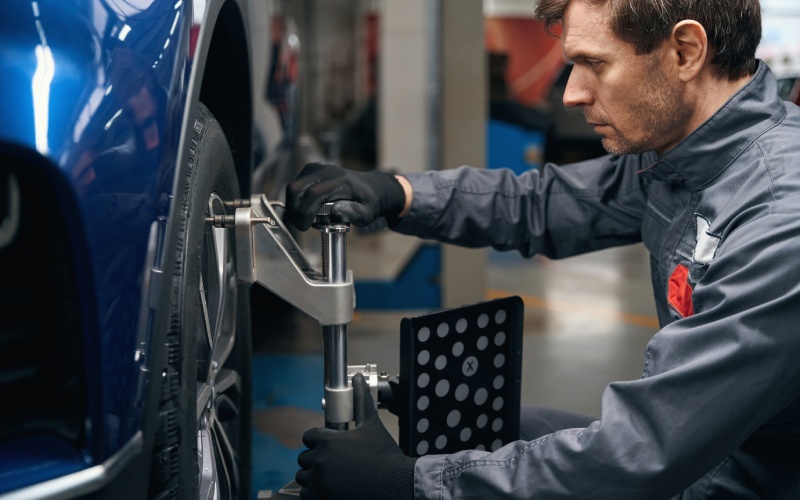
Matt Blatt Kia – Wheel Alignment and Pothole Damage Checks in Egg Harbor Township, NJ
Between the Atlantic City Expressway merges, Garden State Parkway ramps, and daily errands up and down Black Horse Pike, it’s easy for potholes, rail crossings, and seam patches to nudge your wheels out of alignment. If your steering wheel sits a few degrees off-center after a thud on Tilton Road, or your SUV drifts on smooth pavement, you may be losing tread life by the mile. This guide explains how to spot misalignment and impact damage early, the quick checks you can do at home, and what a professional alignment includes to get your ride tracking straight again.
Why alignment matters on Egg Harbor Township roads
Alignment controls how your tires meet the road. Proper camber, caster, and toe angles keep your vehicle stable through Parkway crosswinds and lane changes, reduce rolling resistance for better fuel economy, and help modern driver-assistance tech perform predictably. Misalignment accelerates shoulder wear, lengthens wet-road stopping distances, and makes everyday steering feel vague—especially noticeable on the long, straight stretches between Northfield and Somers Point. Addressing small drifts or vibrations now prevents suspension stress later.
Local driving adds a twist: many Atlantic County corridors blend new pavement with patched joints, low-speed jughandles, and occasional construction plates. Each surface change can invite subtle, cumulative shifts in geometry. If you haul family gear, carpool, or tow on weekends, the added load compounds tire wear when angles aren’t dialed in.
Quick at-home checks before you book
You don’t need a shop to spot early clues. Park on level ground and set the steering wheel dead center. Roll forward a few feet to release tire scrub, then visually compare each front tire’s shoulder wear and note the wheel’s position when driving straight. Lightly release pressure on a level lane—no braking—and observe if the car drifts. Finally, check cold tire pressures against the driver-door placard; mismatched pressures can mimic a pull and mask deeper problems.
- Centering test: If the steering wheel isn’t level on a straight road, geometry or the steering angle sensor may be off.
- Tread edge scan: Feathered or scalloped edges suggest toe or balance concerns; inside wear hints at excess negative camber.
- Straight-line drift: Consistent pull on the same road points to alignment; drift that changes sides may indicate tires or crown effects.
- Speed-specific shake: Vibration between 45–70 mph often signals wheel imbalance or a bent rim from a curb or pothole.
Take brief notes—when the symptoms happen, the roads involved, and any recent curb strikes or tire/strut work. These details help a technician zero in faster and save you a return trip.
What a professional alignment includes
A thorough appointment starts with a road test, then a tire and suspension inspection to find worn tie-rods, ball joints, or bushings that allow angles to wander. Next, your vehicle is mounted on a computerized alignment rack to measure caster, camber, toe, and thrust angle. The technician adjusts to factory tolerances, recenters the steering, and resets the steering angle sensor—vital for stability control and lane-keeping. If you report highway shake, road-force balancing can diagnose a tire’s hard spot and match it to the wheel for a smoother result than basic spin balancing.
If you just added tires, a professional will confirm load ratings, torque lugs precisely, and advise on rotation intervals that match your driving—commutes, Parkway miles, or local school loops. When wheels are aftermarket, verifying clearances and rechecking angles prevents rubbing at full lock or during hard braking.
After-service documentation matters. Ask for the before-and-after printout and keep it with your maintenance records. It proves angles are within spec and helps you spot pattern changes next time.
How often should you align? Many drivers do well with an annual check, sooner if you’ve hit a large pothole, replaced suspension parts, or notice any of the clues above. Roads around Egg Harbor Township can be deceptively straight yet uneven, so listening for the first hint of feathering or steering wander pays off quickly.
Frequently Asked Questions:
Will an alignment fix my car’s pull after a pothole?
Usually, yes. A technician will first rule out brake drag or a low tire, then restore angles to factory spec and recenters the wheel.
Do I need new tires to get an alignment?
No. If tread is serviceable and wear is even enough, an alignment can slow future wear and improve handling without new rubber.
What’s the difference between balancing and alignment?
Balancing eliminates wheel/tire vibration at speed; alignment sets suspension angles so the car tracks straight and tires wear evenly.
Can misalignment affect fuel economy?
Yes. Incorrect toe increases rolling resistance, making engines work harder—noticeable on longer Parkway or Expressway trips.
Should AWD vehicles align more often?
AWD is sensitive to tire circumference differences. Keeping angles correct and rotations on schedule protects the driveline.
Do I need an ADAS calibration after alignment?
Most alignments only require a steering angle sensor reset. If collision repairs or camera/sensor work were done, additional calibration may apply.
If you want a local team that understands Atlantic County road realities and uses OEM-grade equipment, our service department is ready to help. Schedule online, bring your notes, and let one precise visit save you thousands of miles of unnecessary tread wear. For neighbors near Mays Landing, NJ who split time between town and Shore trips, a fresh alignment can make every mile quieter, steadier, and more relaxing.
When you arrive, expect a thorough pre-check, clear communication, and results you can feel the moment you merge back onto Black Horse Pike. One visit with Matt Blatt Kia is often all it takes to rediscover why a truly dialed-in vehicle makes daily driving simpler—and safer.
Request more information
Connect with us


Recent Blog Entries
- Kia TPMS Sensors, Valve Stems, and Tire Care Essentials in Mays Landing, NJ
- Wheel Alignment and Pothole Damage Checks in Egg Harbor Township, NJ
- Smarter Parking and Passing around Atlantic City, NJ with the 2027 Kia Telluride Hybrid
- 2026 Kia K4 GT-Line Turbo — Smart Power and Everyday Confidence for Absecon, NJ
- Class-Leading Cargo and Smart Cabin Tech — Why the 2027 Kia Seltos Fits Atlantic City, NJ Driving
Categories
 Warranties include 10-year/100,000-mile powertrain and 5-year/60,000-mile basic. All warranties and roadside assistance are limited. See retailer for warranty details.